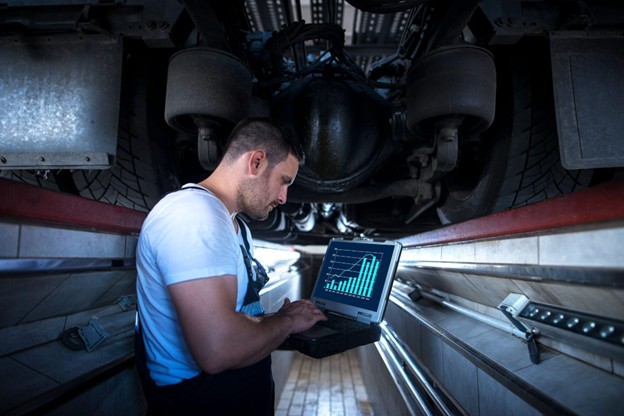
Automotive repair has shifted significantly over the past decade, and Jeffrey Donald Lux highlights how modern vehicles now rely heavily on diagnostic systems rather than traditional mechanical guesswork, where identifying issues requires data interpretation, system analysis, and technical precision. As vehicles advance, accurate diagnosis is as vital as physical repair.
This shift reflects a broader transformation in the automotive industry, where technology and mechanics are no longer separate disciplines but fully integrated systems.
From Mechanical Simplicity to Digital Complexity
Older vehicles were largely mechanical, making problems easier to identify through sound, feel, or visible wear. Technicians could often diagnose issues based on experience and observation alone.
Modern vehicles, however, are built around the following:
- Integrated computer systems controlling multiple functions
- Sensors monitoring performance in real time
- Electronic control units (ECUs) manage key operations
- Software-driven diagnostics that detect irregularities
This evolution has made vehicles more efficient and reliable, but also more complex to repair.
The Role of Onboard Diagnostics Systems
Onboard diagnostics systems, commonly referred to as OBD, are now central to vehicle maintenance and repair. These systems continuously monitor engine performance, emissions, and other critical functions.
Key capabilities include:
- Detecting faults before they become major issues
- Generating error codes that point to specific problems
- Providing real-time data for analysis
- Supporting preventive maintenance strategies
Rather than relying on trial and error, technicians now use these systems as the starting point for identifying issues.
Why Guesswork No Longer Works
Mechanical guesswork is no longer effective in modern vehicles because problems are often not visible or directly mechanical in nature.
Challenges include:
- Multiple systems are interacting simultaneously
- Electronic faults that mimic mechanical issues
- Hidden problems that do not produce obvious symptoms
- Increased precision requirements in repairs
Without proper diagnostics, even experienced technicians can misidentify the root cause of a problem.
Data-Driven Troubleshooting
Modern automotive repair is increasingly data-driven. Technicians must interpret information from diagnostic tools and translate it into actionable steps.
This process involves:
- Reading and understanding diagnostic trouble codes
- Analyzing sensor data for irregular patterns
- Identifying the relationship between different systems
- Confirming issues through systematic testing
This approach reduces uncertainty and improves accuracy in repairs.
The Importance of Electrical System Knowledge
As diagnostics become more central, understanding electrical systems is essential. Many issues originate from wiring, sensors, or electronic components rather than mechanical failure.
This requires:
- Knowledge of circuit design and function
- Ability to test electrical connections and components
- Understanding of how signals are transmitted and received
- Familiarity with diagnostic equipment and software
Electrical knowledge is now a core skill for modern technicians.
How Training Is Adapting to Industry Changes
Automotive education has evolved to reflect these changes. Training programs now emphasize both mechanical skills and technical knowledge.
Key areas of focus include:
- Troubleshooting onboard computer systems
- Diagnosing electrical and electronic issues
- Understanding integrated vehicle systems
- Learning how to use advanced diagnostic tools
This combination prepares technicians to handle the complexity of modern vehicles.
Efficiency and Accuracy in Repairs
Diagnostics improve not only accuracy but also efficiency. By identifying the root cause of a problem quickly, technicians can avoid unnecessary repairs.
Benefits include:
- Reduced time spent on trial-and-error fixes
- Lower costs associated with incorrect repairs
- Improved customer satisfaction
- More consistent repair outcomes
Accurate diagnostics lead to better overall performance in service environments.
Preventive Maintenance Through Diagnostics
One of the most significant advantages of modern diagnostic systems is their ability to support preventive maintenance.
This includes:
- Identifying issues before they cause breakdowns
- Monitoring system performance over time
- Providing early warnings for potential failures
- Allowing for scheduled maintenance based on actual data
Preventive maintenance reduces long-term costs and improves vehicle reliability.
The Technician’s Role Is Evolving
The role of the automotive technician has expanded beyond physical repair. It now includes analysis, interpretation, and problem-solving.
Modern technicians must:
- Think critically about system interactions
- Use diagnostic tools effectively
- Stay updated with evolving technologies
- Combine hands-on skills with technical knowledge
This evolution reflects the increasing complexity of vehicles.
Common Misconceptions About Diagnostics
Despite their importance, diagnostic systems are sometimes misunderstood.
Common misconceptions include:
- Believing that error codes directly identify the exact problem
- Assuming that replacing parts based on codes will solve the issue
- Overlooking the need for deeper analysis
- Treating diagnostics as a shortcut rather than a tool
In reality, diagnostics provide direction, not final answers.
Balancing Technology and Mechanical Skill
While diagnostics are essential, mechanical knowledge remains important. Effective repair requires a balance between technology and hands-on skill.
This balance involves:
- Using diagnostics to identify issues
- Applying mechanical expertise to resolve them
- Understanding how systems interact physically and electronically
- Maintaining a holistic approach to repair
Both aspects are necessary for successful outcomes.
The Future of Automotive Diagnostics
As technology continues to evolve, diagnostics will become even more advanced. Vehicles are moving toward greater automation and connectivity.
Future developments may include:
- More sophisticated onboard systems
- Increased use of artificial intelligence in diagnostics
- Greater integration between vehicles and external systems
- Enhanced predictive maintenance capabilities
Technicians will need to adapt continuously to keep pace with these changes.
Final Thoughts
Modern vehicles have transformed automotive repair into a data-driven process where diagnostics play a central role. The shift away from mechanical guesswork reflects the increasing complexity and integration of vehicle systems.
By developing strong diagnostic skills and understanding both mechanical and electronic systems, technicians can navigate this complexity effectively. This approach not only improves repair accuracy but also supports long-term reliability and performance in an evolving automotive landscape.