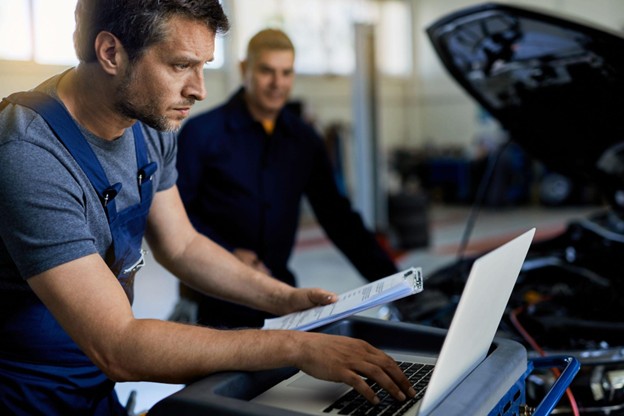
As Jeffrey Lux of NJ emphasizes, one of the most transformative shifts in the industry is the rapid integration of artificial intelligence into vehicle diagnostics. Modern auto repair is no longer just about wrenches and mechanical intuition; it is increasingly about data interpretation, software fluency, and predictive analysis.
Vehicles today are rolling networks of sensors, processors, and interconnected modules. The technician’s role is evolving from mechanical problem-solver to systems analyst.
From Check Engine Lights to Intelligent Analysis
For decades, diagnostics relied on onboard diagnostic systems (OBD-II) that generated fault codes. A technician would scan the code, consult documentation, and trace the issue manually.
Today, AI-enhanced diagnostic platforms go much further.
Modern tools can:
- Aggregate live sensor data in real time
- Compare fault patterns against cloud-based databases
- Suggest probable causes ranked by likelihood
- Identify emerging issues before failure occurs
Instead of simply reporting what has already broken, systems are beginning to predict what is about to fail.
That shift changes everything.
How Machine Learning Enters the Garage
Machine learning thrives on data. The automotive industry produces enormous volumes of it.
Every vehicle equipped with advanced electronics generates streams of information from:
- Engine control modules
- Transmission systems
- Battery management systems
- Advanced driver assistance sensors
- Climate control units
Collective analysis of this data reveals patterns. AI systems can detect correlations that would take human technicians far longer to identify.
For example:
- A subtle voltage irregularity combined with temperature data may signal an alternator issue before complete failure.
- Brake sensor feedback combined with driving behavior patterns may predict premature wear.
The technician’s expertise remains critical, but AI narrows the search.
Predictive Maintenance: A New Standard
One of the most significant developments is predictive maintenance.
Instead of reacting to breakdowns, AI-powered systems monitor trends over time. Small deviations from normal operating behavior trigger early alerts.
Benefits include:
- Reduced unexpected failures
- Lower long-term repair costs
- Increased vehicle lifespan
- Enhanced safety
For fleet operators, predictive diagnostics reduce downtime dramatically. For everyday drivers, it means fewer surprise repair bills.
This shift from reactive to proactive service represents a fundamental industry evolution.
The Changing Skillset of Technicians
As diagnostics become more software-driven, technician training must expand.
Mechanical skill remains foundational. However, modern automotive professionals increasingly need:
- Electrical systems knowledge
- Comfort with diagnostic software interfaces
- Data interpretation ability
- Understanding of communication networks (CAN bus systems)
- Cybersecurity awareness
Troubleshooting now often involves reading live data streams, analyzing waveform patterns, and understanding how modules communicate.
The future technician blends mechanical intuition with digital literacy.
AI as an Assistant, Not a Replacement
A common misconception is that artificial intelligence will replace technicians. In reality, AI serves as a support system.
Diagnostic software may suggest probabilities, but it cannot physically inspect components, evaluate mechanical wear, or apply contextual judgment.
Human expertise remains indispensable for:
- Verifying AI-generated conclusions
- Identifying physical anomalies
- Performing repairs with precision
- Communicating clearly with customers
AI accelerates analysis; it does not eliminate craftsmanship.
Data Accuracy and Responsibility
As reliance on AI grows, data accuracy becomes critical.
Poor-quality data leads to flawed predictions. Technicians must ensure:
- Proper sensor calibration
- Accurate scan tool updates
- Consistent documentation
The integrity of AI diagnostics depends on the integrity of input data.
This reinforces the importance of strong foundational training in electrical systems and onboard computer troubleshooting.
Impacts on Independent Shops
Dealerships are not the only ones using AI-driven diagnostics. Independent repair facilities are increasingly adopting advanced scan tools connected to cloud databases.
This creates:
- Greater diagnostic consistency
- Faster service turnaround
- Competitive parity with larger operations
However, it also demands ongoing investment in updated equipment and training.
Shops that adapt remain competitive. Those that resist modernization risk falling behind.
Integration with Electric and Hybrid Vehicles
Electric and hybrid vehicles rely heavily on software-controlled systems. Battery management, regenerative braking, and inverter control require precise monitoring.
AI diagnostics are particularly valuable in these platforms because:
- Mechanical access may be limited
- Software faults are common
- High-voltage safety requires exact analysis
As EV adoption grows, AI-assisted diagnostics will become even more central to daily repair operations.
The Ethical and Security Dimension
With increased data connectivity comes increased responsibility.
Connected diagnostic systems may interface with cloud servers and manufacturer databases. This raises important considerations:
- Data privacy
- Cybersecurity
- Secure software updates
Technicians must understand not only mechanical repair but also digital safeguards.
The modern garage is as much a technology hub as it is a mechanical workspace.
Education Meets Industry Evolution
Automotive training programs now reflect this transformation.
Students are learning:
- Advanced scan tool operation
- Electronic systems troubleshooting
- Data-driven repair procedures
- Software-based calibration processes
Digital diagnostics education increasingly pairs with hands-on mechanical rebuilding, which remains essential.
The technician of tomorrow must be comfortable navigating both worlds.
The Road Ahead
Artificial intelligence will not eliminate mechanical complexity. Vehicles will continue to wear down, require maintenance, and need human repair.
However, AI will enhance the speed and precision of problem identification.
Instead of lengthy guesswork, technicians can rely on structured probability models. Instead of reactive fixes, predictive alerts will guide maintenance schedules.
Efficiency improves. Downtime decreases. Precision increases.
A New Era of Automotive Intelligence
The automotive industry has always evolved from carburetors to fuel injection and from manual transmissions to electronically controlled gearboxes.
AI diagnostics represent the next major step.
Fixing broken parts is no longer the sole focus of auto repair. It is about interpreting data, anticipating issues, and managing increasingly intelligent machines.
The tools are becoming smarter. The vehicles are becoming more connected. And the role of the technician is becoming more analytical, strategic, and technologically advanced.
The garage of the future will still require skilled hands, but it will also demand informed minds capable of navigating the intersection of mechanics and machine learning.